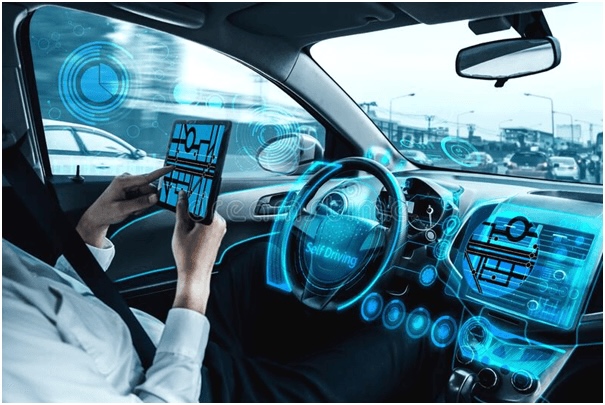
The evolution of self-driving vehicles has accelerated through the years. Most vehicles already have some type of automation.
In 2018, IKEA developed a concept autonomous vehicle that can double up as meeting rooms, hotels and stores.
The impact of this type of technological development is to reduce travel requirements, and it offers interchangeable, on-demand environments wherever and whenever we need them.
The promise of driverless technology has long been tempting, and it has the potential to transform our lives, making our travel more accessible and safer.
The World Health Organization estimates that more than 1.3 million people die each year due to road traffic crashes.
“We want safer roads and less fatalities. Automation ultimately could provide that”, says Camilla Fowler, head of automated transport for the UK’s Transport Research Laboratory (TRL).
As we navigate forward into a futuristic world, it’s important to understand the pros and cons of self-driving vehicles.
The Pros of the futuristic self-driving cars
Reduced vehicle crashes:
The majority of vehicle crashes are due to human mistakes. It is estimated that fully automated vehicles can reduce crashes by 90%.
Self-driving vehicles can potentially eliminate accidents caused by driver fatigue, inattention and distracted driving, and alcohol-related impairment.
More efficient travel:
Fully automated vehicles can communicate with each other through a network of computers. Thich allows real-time analysis that helps determine the best travel routes and calculate appropriate speeds and distances between vehicles during traffic.
Is it really for the better good?
It has been argued that for a fully autonomous driving system to work is if all vehicles are self-driving.
The problem with this concept is that it would essentially strip people of their independent ability to drive.
A vast portion of the population depends a lot on the automotive industry for their everyday lives. Many working in trucking, public transportation, and delivery services would find their roles obsolete in a fully self-driving future.
Hackers and cyber-security threats:
Security issues are a grave concern on self-driving vehicles. When vehicles rely on computers to function, they are susceptible to cyber threats.
If an entire system is compromised, so would society’s ability to remain connected and provide essential resources to the masses.
The severity of a breach of an autonomous vehicle network would be incalculable compared to any other ransomware attack.
Owning a driverless car would be too expensive for most people. But the promise of driverless technology is about unchaining us from our reliance on cars and how that can transform the use of our time and environment.
Keep thinking ahead
Much in the same way that electric and hybrid cars have slowly made their way into our everyday lives, so will autonomous vehicles. Years from now, we will be wondering how we ever lived without them.
The debate on self-driving vehicles and the use of fully autonomous technology rages on. The reality is that we will continue to see advancements in this technology. We need to be thinking ahead on how to incorporate these advancements into our daily lives.
If your dream is to have a self-driving car in the future, but you don’t have enough money to make your dream come true, don’t worry about it. House of Cars Calgary has the solution for you.
Aside from having the best used trucks, SUVs, and other cars for sale, we have the best financial plans that suit your needs best.
Don’t wait any longer, and get in touch with House of Cars to get the financial aid and orientation you need so you can leave the lot with the car of your dreams, whether it comes with driverless technology or not.